Published 14 July 2026 · 6 min read
Start with what the camera cannot remove
Retouching can take out a power socket or a stray cable. It cannot invent a garden that was never watered, straighten a sun lounger cushion that is genuinely misshapen, or clean a pool that has gone cloudy. So the preparation list is really a list of things that are permanent in the frame.
Two weeks out, three things need starting because they take time: the garden needs its last cut about four days before the shoot, not the morning of — freshly cut grass photographs raw. The pool needs a service and, if the water has any colour to it, a full balance. And anything broken or missing needs ordering: a cracked tile, a dead bulb in a feature light, a chipped pot.
The week before
- Replace every bulb in a visible fitting — and make them the same colour temperature. One cold bulb in a row of warm ones is the single most common problem in villa interiors, and it is not a quick fix in post.
- Clean the glass. Windows, sliding doors, glass balustrades, shower screens. Twilight frames show every mark.
- Launder the whites. Bed linen, towels, cushion covers, table linen. Crisp linen reads as a well-run house more reliably than any piece of furniture.
- Decide on the flowers. Fresh, simple, and delivered the day before. Big tropical arrangements date a photograph very quickly.
The day before
This is the day for staging, and the rule is subtraction. Everything personal, everything plastic, everything branded goes away: shampoo bottles, dish soap, fridge magnets, remote controls, chargers, staff shoes at the door, the safety notice on the pool fence if it is removable.
Then put back a very small number of chosen objects. A folded throw. Two books. A tray with glasses. A bowl of limes in the kitchen. The test is whether it looks like the house is lived in by someone with taste, not whether it looks like a showroom.
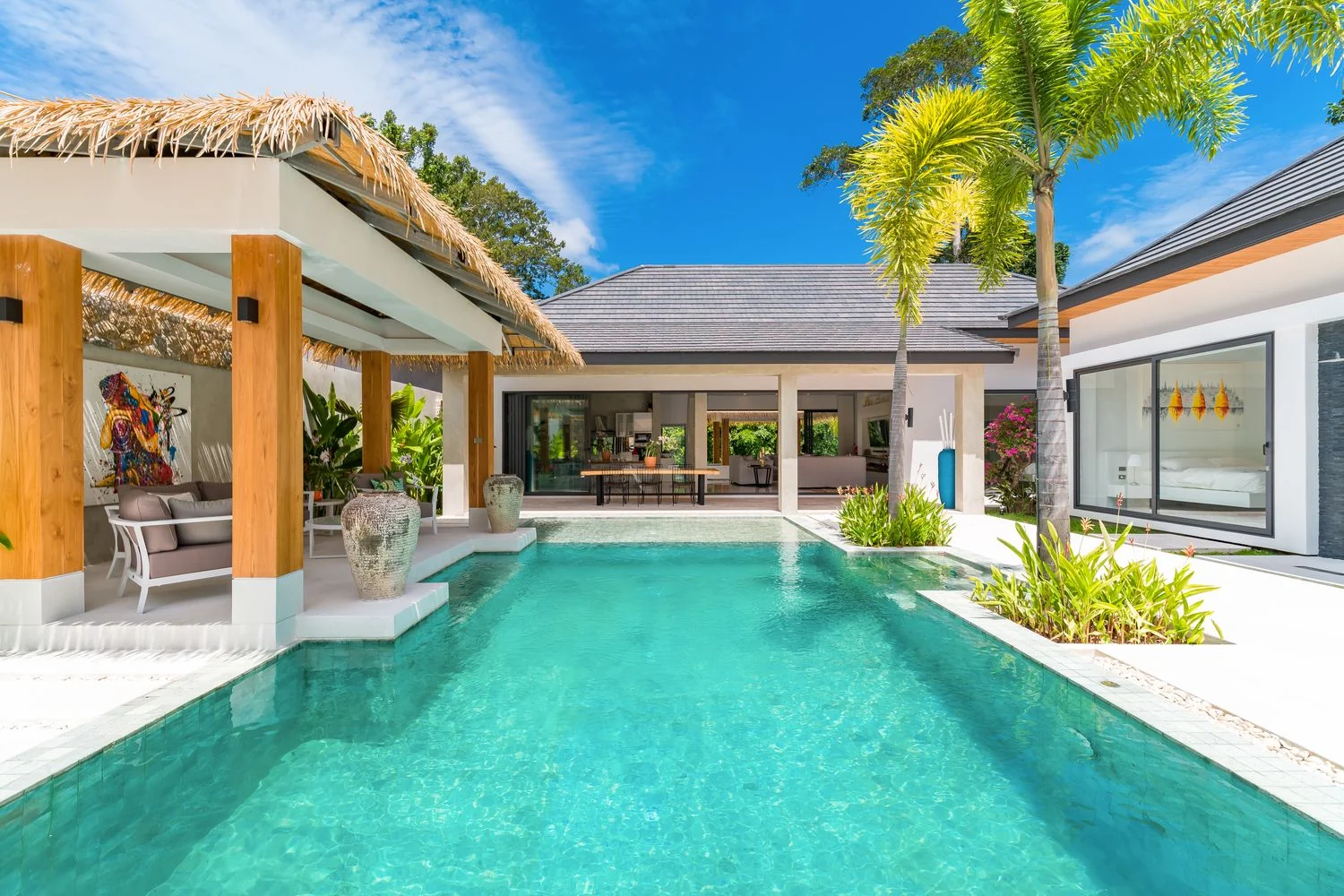
Outdoors, align the loungers. Actually align them — parallel, equal spacing, cushions squared and matching. It takes ten minutes and it is visible in every single exterior frame.
The morning of
- Skim the pool and run the filter early, then switch off the pump about thirty minutes before shooting so the surface goes flat. A still pool reflects; a moving pool does not.
- Open every curtain and blind fully, then leave them alone — we set them per room.
- Switch off ceiling fans. A spinning fan blurs and looks broken in a still frame.
- Empty the bins and take them out of sight, including the outdoor ones.
- Park all vehicles, including staff scooters, well away from the house and out of any aerial line of sight.
- Have air conditioning running in the rooms we will shoot. Long sessions in a hot room are slow, and warm glass fogs.
What genuinely does not matter
Owners often worry about the wrong things. Small scuffs on a wall, a slightly worn timber deck, an older kitchen appliance — these are either invisible at the working distance or easy to handle in the edit. Do not repaint a wall for a shoot.
It also does not matter if the sky is not perfect. A flat overcast morning is a real problem for one or two frames and completely fine for most interiors, which prefer soft light anyway. Rescheduling around cloud is usually unnecessary; rescheduling around heavy rain is not.
One thing to agree in advance
Decide who is on site during the shoot and what they can do. Someone who knows the house — where the lighting circuits are, which door sticks, how the pool lights switch on — saves more time than any other single factor. They do not need to follow us around; they need to be reachable.
And agree the shot list before the day, not on it. Twelve rooms photographed at a comfortable pace is a better set than twenty rushed, and the difference is decided by a conversation that takes five minutes.